
Article: Where Snow Meets Resolve: Lessons from Mount Rainier’s Alpine Wilderness
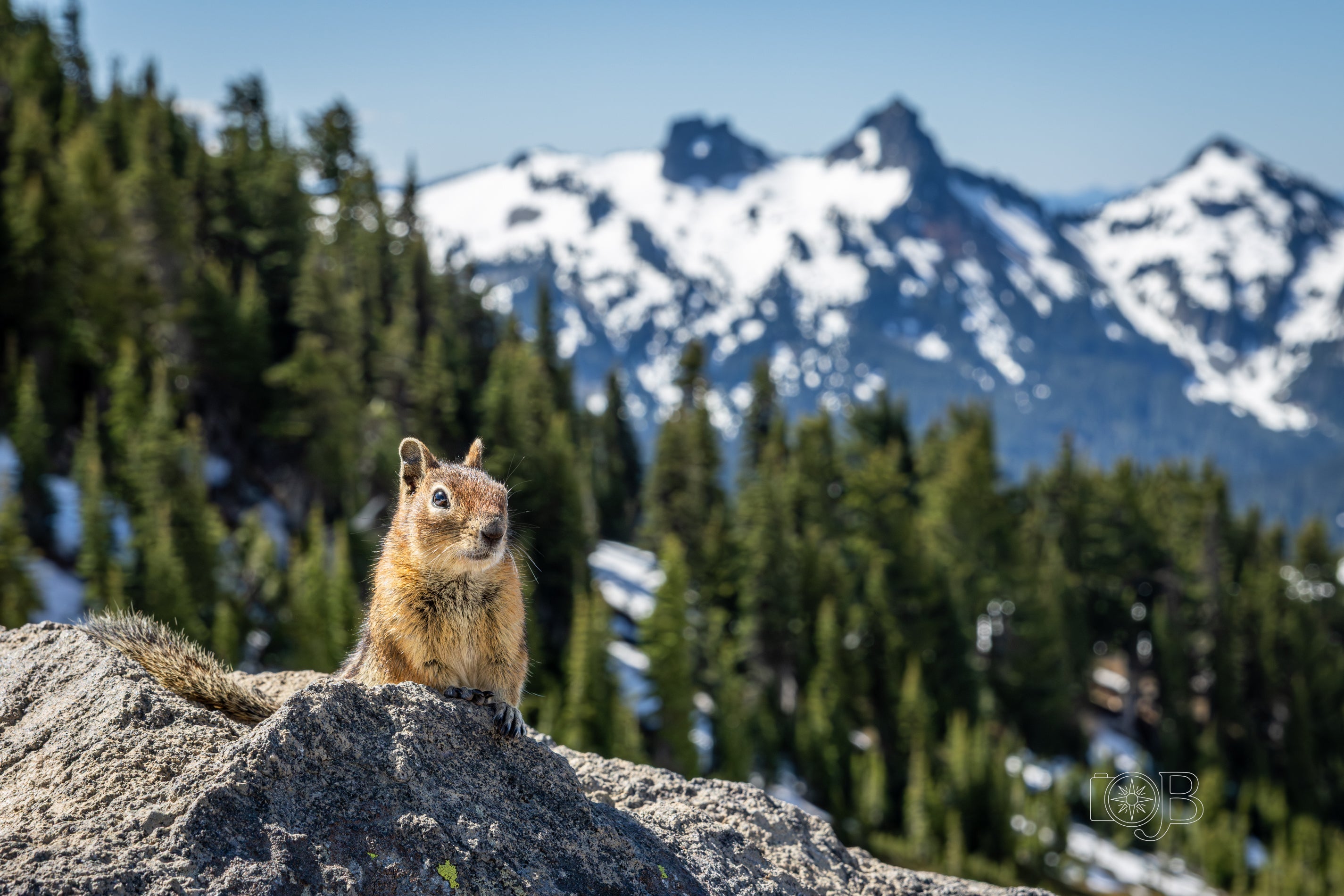
Where Snow Meets Resolve: Lessons from Mount Rainier’s Alpine Wilderness
Going back to a place you’ve only had a peak at, realized you needed more gear, and now you’ve returned to accomplish your goal. Living in Florida for 20 years didn’t expose me to a hike like this, nor have I discovered one in my travels. But hiking along a snow covered trail seem new, exciting, and something I could challenge myself to experience.

Mount Rainier rises more than 14,000 feet above the Pacific Northwest, dominating the skyline and shaping the ecosystems that surround it. Yet despite its immense scale, the park’s most memorable experiences are often found on foot, along narrow alpine trails that weave through wildflower meadows, glacial valleys, and windswept ridgelines.

On this particular morning, the goal wasn’t distance or elevation gain. It was immersion.
The trail began beneath a cool mountain breeze, winding steadily upward through subalpine terrain. Already, I crunched brown slush and snow beneath my feet, where so many others had trekked dirt through. The sun was glaring down at 8:30am, the snow reflecting the brightness, and the “mountain was out” - it was crystal clear day, blue skies, and gorgeous.
As the forest opened, the landscape expanded in every direction. Snowfields lingered on distant slopes while rugged volcanic ridges framed the horizon. Below, valleys disappeared into layers of evergreen forest that stretched toward the lowlands of western Washington.
Every step revealed another perspective.

In alpine environments, life exists on a razor’s edge. Wildflowers emerge during a brief sunny window. Marmots emerge from their burrows and patrol rocky outcrops. Mountain chickadee and Clark’s nutcrackers call overhead as they move between stands of mountain hemlock. The growing season is measured in weeks rather than months, yet the resilience of these ecosystems is evident everywhere.
For outdoor photographers and hikers, these high-elevation landscapes offer more than dramatic scenery. They provide a sense of scale that is increasingly rare in modern life. Standing above treeline, surrounded by glaciers and volcanic peaks, it becomes impossible not to recognize how small we are within the larger story of the natural world.

As the trail climbed higher, Rainier remained a constant companion. Massive glaciers spilled from the mountain’s upper reaches, carving valleys that have shaped this landscape for thousands of years. Snowmelt waterfalls could be heard and felt. The mountain felt alive—not merely a backdrop for adventure, but the central character in a landscape defined by ice, rock, weather, and time.
There is a reason so many hikers return to these alpine trails year after year, and why the Skyline Loop Trail is so popular.
The experience isn’t solely about reaching a viewpoint or checking another destination off a list. It is about witnessing a landscape in motion. Snow melts into streams. Wildflowers bloom and fade. Clouds gather and disperse. Light shifts across ridges and glaciers. Every visit reveals something different.

By late morning, the crowds began to arrive, but the solitude of the early hours lingered. I was hiking solo, but never truly alone. Around each bend, new challenges appeared, but so did the breathtaking views. I splashed in the mud from melting snow, and I slide down icy trails where so many others probably did the same thing.
As the descent began and I was encouraging myself that “I’m almost there,” the journey reminded me that as tough as the climb is, look back and see how far you’ve come. Yes, it was tough down there and it will be tough at the top. You’ll fall and slide down, but get back up and keep moving forward, because you still can.
Some places leave an impression because they are beautiful. Others leave an impression because they make us feel something larger than ourselves and remind us just how mentally tough we are, too.

Trail Notes
Location: Mount Rainier National Park
Region: Washington
Best Season: Mid-July through September for alpine wildflowers and accessible high-country trails
What to Bring: Layers, rain protection, water, sun protection, camera, and a willingness to slow down and observe the landscape
Photography Tip: Arrive before sunrise. The first hour of light often provides the most dramatic conditions for photographing both the mountain and surrounding alpine meadows.
In the high country of Rainier, the trail is merely the route. The experience is everything that happens when you pause long enough to notice the mountain breathing around you.

Leave a comment
This site is protected by hCaptcha and the hCaptcha Privacy Policy and Terms of Service apply.