
Behind the Lens: Road Trip Lessons in Filmmaking and Resilience
The photographs and videos tell one story. The story behind them is often entirely different.

Sunset in the Great Smoky Mountains
When people see a sunrise timelapse from a mountaintop or a dramatic sunset over the Badlands, they rarely see the exhaustion, uncertainty, or quiet determination that happened in the hours before the camera started recording.

Sunset in the Badlands of South Dakota
This roadtrip across America wasn’t just about moving from one side of the country to the other. It became an unexpected field test—both for my filmmaking process and for myself.
The Reality Behind the Beautiful Images
At the top of Kuwohi/Clingman's Dome (the highest peak in the mountain range) in the Great Smoky Mountains, I stood in freezing wind waiting for sunset. Figuring out my camera settings and position for the best visual of this slowly changing scene.

The seriousness concentration on my face...

Gotta love the freeze frame moments your friends capture, lol :) I'm trying to get my hands in the pockets, because it's freezing!!!
The forecast looked reasonable enough, but mountain weather has a way of humbling expectations. The wind cut through every layer I had packed, and as the sun disappeared behind the ridges, I found myself shivering while watching my camera slowly capture the changing light.
It was uncomfortable and incredible.

The layers of blue mountains stretched endlessly into the distance, and for a few minutes everything felt still despite the wind. The timelapse that came from that evening remains one of my favorite moments from the trip—not because it was easy, but because it wasn’t.
After an especially cold night back at camp, we were up before dawn, driving through darkness toward Newfound Gap. Thankfully, while I was setting up the camera and tripod, my best friend was heating water on a backpacker stove to make hot coffee and oatmeal with fresh blueberries.

If you don't know yet, I'm on a Rattlesnake kick, so every coffee and tea that has a rattlesnake on it, I buy it. :)
I had built an image in my head of what kind of sunrise timelapse I would look like- cloud textures and glowing orange sunlight. As photographers and filmmakers, we often do this. We imagine dramatic clouds, perfect light, and conditions that align with our vision.

Nature had other plans, and the sunrise wasn’t what I hoped for. It was okay.
The light and textures never really developed the way I wanted, and creatively it felt disappointing at first. But that’s part of working outdoors. The landscape doesn’t owe us the image we imagined. Sometimes the lesson is learning to accept what the day offers rather than forcing what we wanted.


Riding onto the next stop: Horseback riding on Copperhead in the Smokies was a highlight of the trip!
Then came the Badlands of South Dakota.
I researched the vast landscapes and dramatic rock formations before the trip to have an idea of the look I wanted, but I wasn’t prepared for the wind.

Standing at different pull-out points along the winding park road felt like standing beside a freight train. The wind roared across the landscape and was relentless for hours; rattling my teeth and the telephoto lens.
Yet somehow the noise made the place feel even more wild—constantly being shaped by the same forces that had carved the formations over thousands of years.
Harsh. Unforgiving. Beautiful.

The Moment I Hit My Limit
By the time we reached the Badlands, the miles were beginning to add up.

Camping night after night. Driving long distances. Constantly evaluating locations. Setting up cameras. Breaking down camp.
Repeating the process again the next day.
I reached a point where I was simply tired, worn out, and just couldn’t think creatively anymore. As creators, we often talk about inspiration, but very few people talk about decision fatigue. Every photograph, every camera angle, every location choice requires energy.
Eventually the creative well runs low.

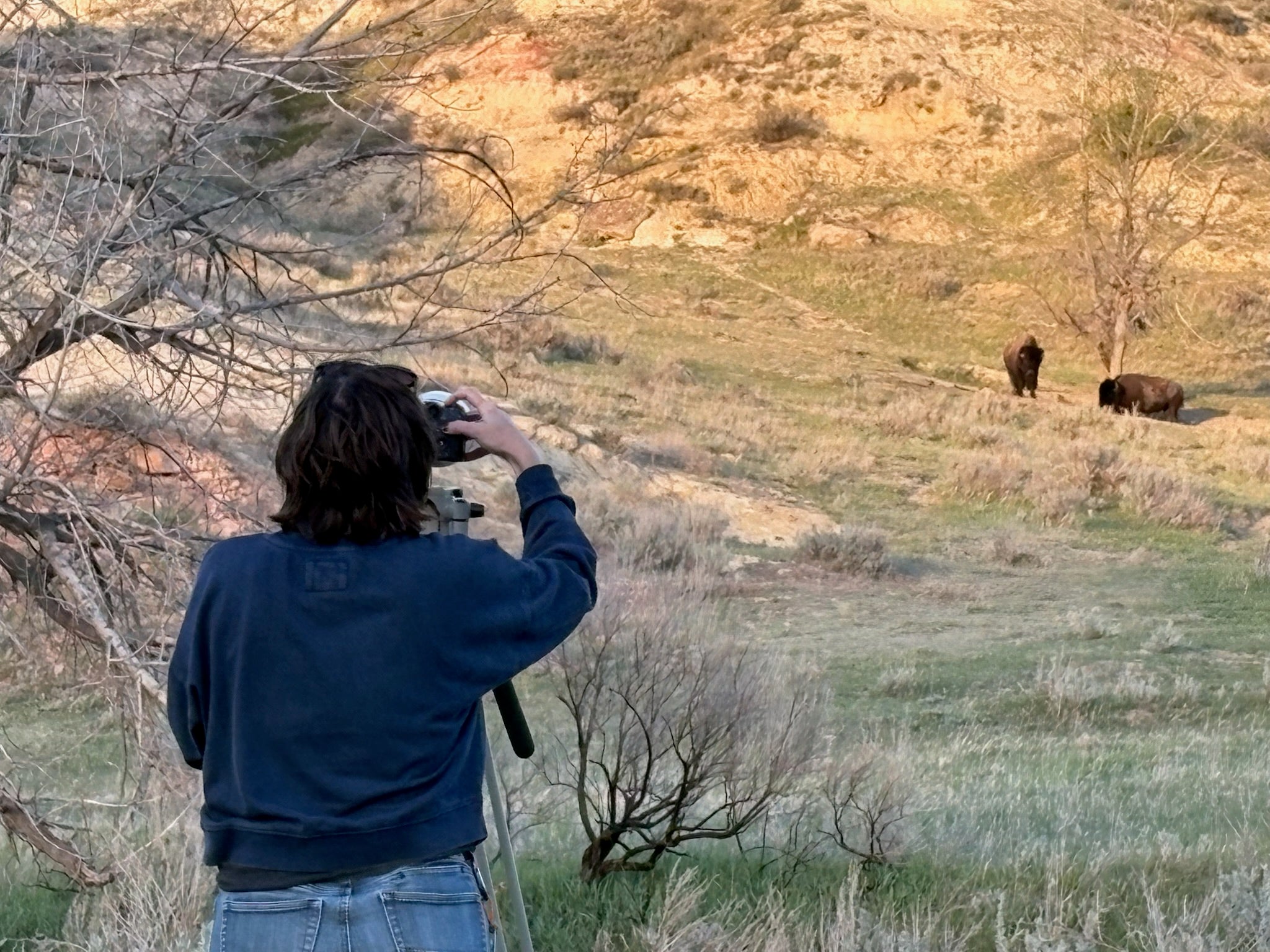
Pushing on to Theodore Roosevelt National Park in North Dakota
I remember standing there feeling mentally drained and questioning whether I had anything left to create that day.
That’s when my best friend stepped in. She gently encouraged me to keep going. Just a little further. One more overlook. One more attempt. Let’s just go around the corner and see what’s there.
Looking back, some of the most rewarding moments of the trip happened because of that encouragement.


The Gift of Traveling with the Right Person
One of the biggest lessons from this journey had nothing to do with photography.
It had everything to do with partnership.

Quick lunch break in the Smokies by a beautiful creek.
While I was focused on the logistics of moving across the country, my best friend was researching routes, planning stops, identifying viewpoints, and making sure we got the most out of the experience.
She did the heavy lifting and I simply showed up and created.

Sunset in the Badlands National Park with the incredible rock formations.
That kind of support is easy to underestimate until you’re living on the road for days at a time.
There are people who drain your energy during challenging adventures.
And there are people who multiply it.
This trip reminded me how valuable it is to have someone beside you who believes in the journey, especially when you temporarily lose sight of it yourself.
For that, I am endlessly grateful.

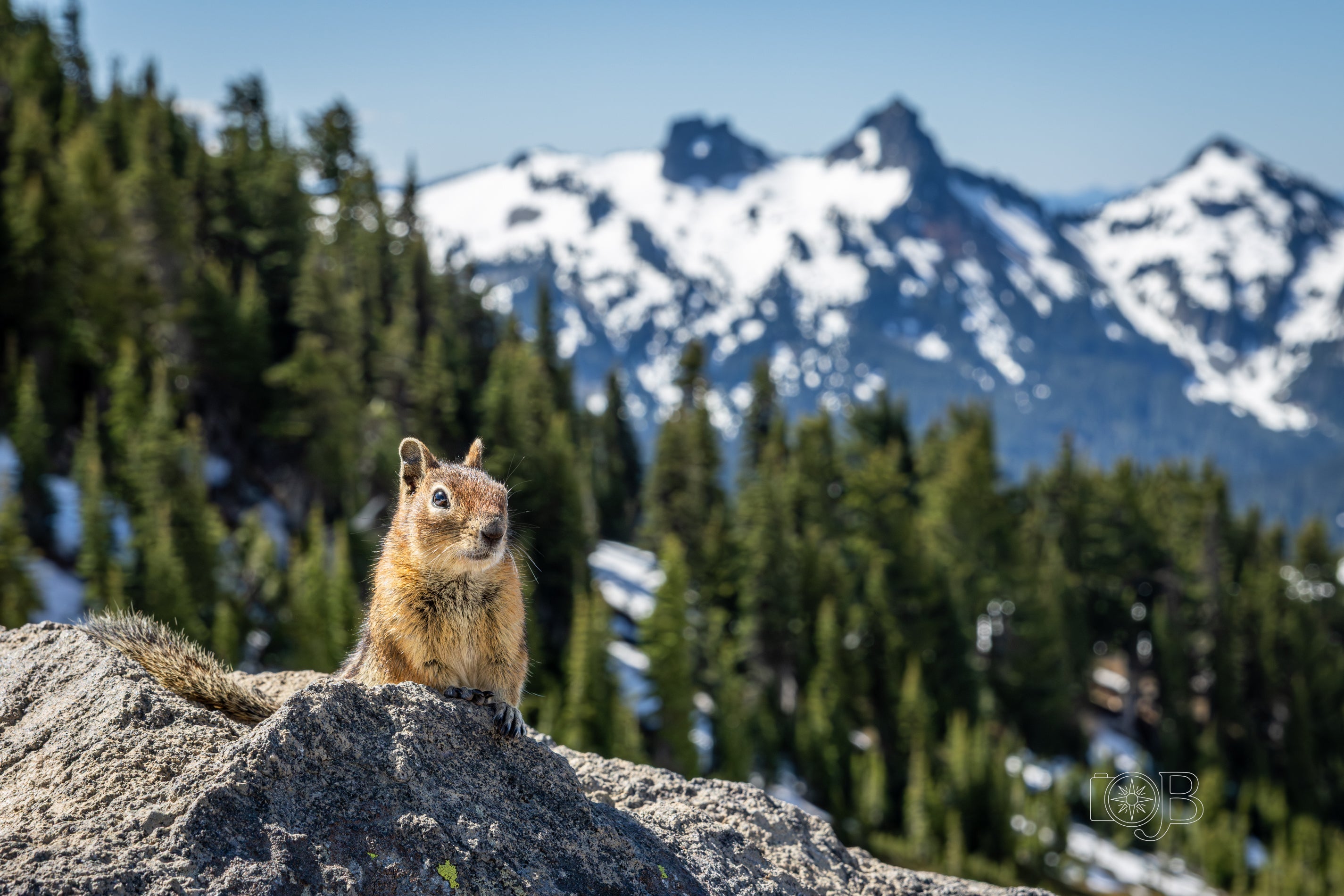
Hiking up to Mt Rainier in Washington and having fun in the snow!
What I Learned as a Filmmaker
I originally viewed this trip as a move. What it became was one of the most useful field tests I’ve ever done.
Living out of a vehicle and camping across America quickly exposes weaknesses in your systems. The trip highlighted gaps in my gear setup, travel routines, and creative process that I wouldn’t have discovered at home.
The biggest lessons?
I need more power capacity: Running cameras, charging batteries, backing up footage, and keeping devices operational while traveling is an entirely different challenge than working from home. More power banks and a stronger charging system immediately moved to the top of my priority list.
I need better recovery time.
I learned that creativity isn’t an unlimited resource. Constant movement eventually reduces my ability to see and think creatively. Building intentional rest stops into future trips isn’t a luxury—it’s part of the process.
I need to know when to push.
Some of my favorite images came from moments when I wanted to quit. The extra hike. The extra viewpoint. The extra ten minutes waiting for light.
Sometimes the reward is just beyond the point of discomfort, but I also need to know when to stop. Not every moment requires pushing harder.
Sometimes the best thing I can do as a creator is slow down, breathe, eat, rest, and reset.
The challenge moving forward is learning the difference between those two situations.

Appreciating the ancient colossal trees in Mount Rainier National Park, Washington.
Looking Back
When I think about this roadtrip, I don’t immediately think about the footage or the photographs.
I think about cold mornings with hot coffee and blueberry oatmeal before the sunrise.
I think about wind howling across rugged landscapes and sunsets in unfamiliar places.
I think about sleeping in campgrounds across America and waking up somewhere new every day.
Most of all, I think about what the journey revealed.
Great adventures aren’t always about discovering new places.
Sometimes they’re about discovering what you need to keep moving forward.
This roadtrip revealed to me the filmmaker I’m becoming, the systems I still need to build, and the balance I’m still learning between perseverance and rest.
And somewhere between the Smokies, the Badlands, the prairies, mountains, and temperate rainforests of the Pacific Northwest, I realized that both are equally important.


Leave a comment
This site is protected by hCaptcha and the hCaptcha Privacy Policy and Terms of Service apply.